BOTANICAL HERITAGE AT 307 MAIN
Same Address. Same Plant. A Century Apart.
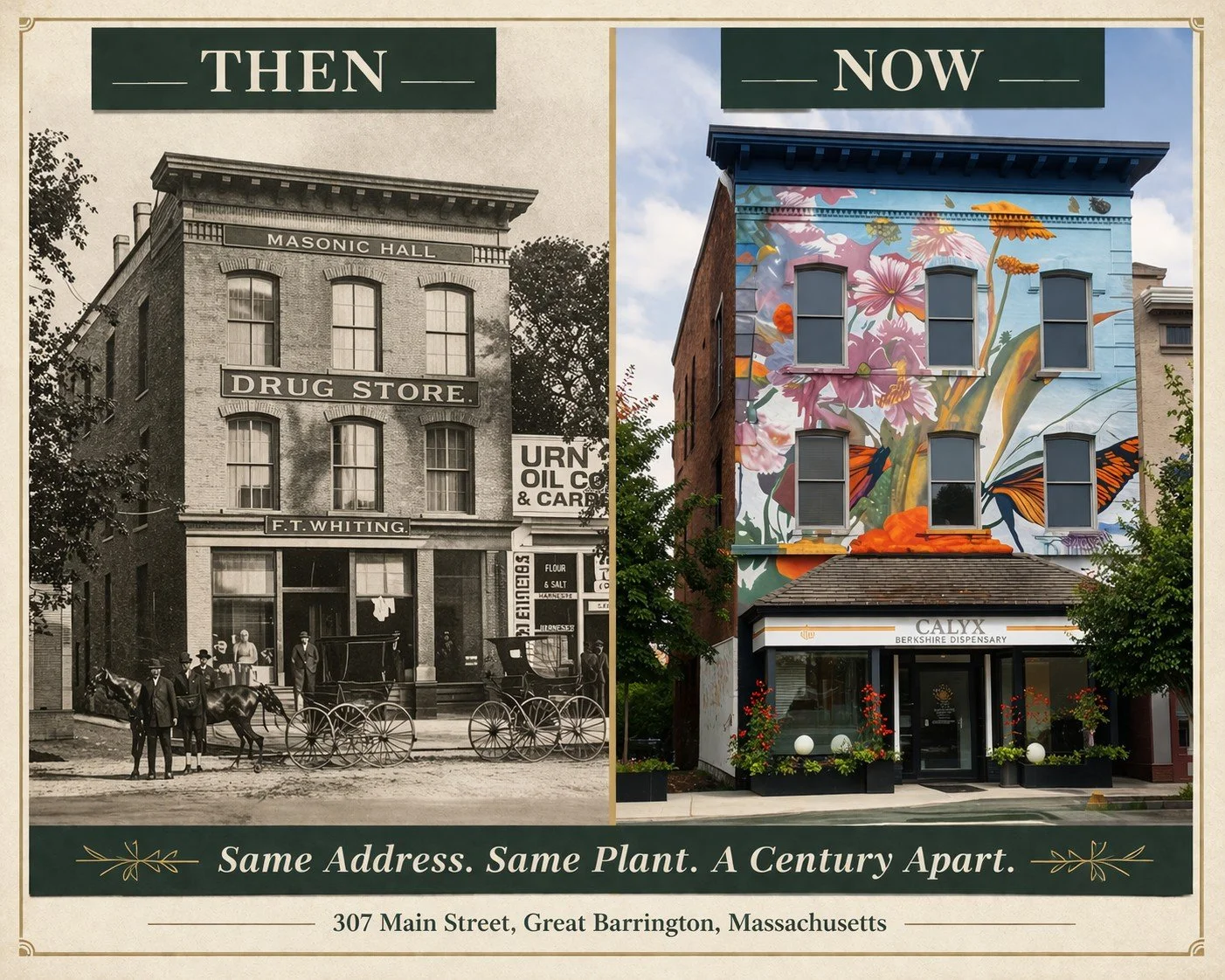
At 307 Main Street, the story of a nineteenth-century apothecary and a modern botanical cannabis boutique meet across more than a century of Great Barrington history.
307 MAIN STREET, CIRCA 1900
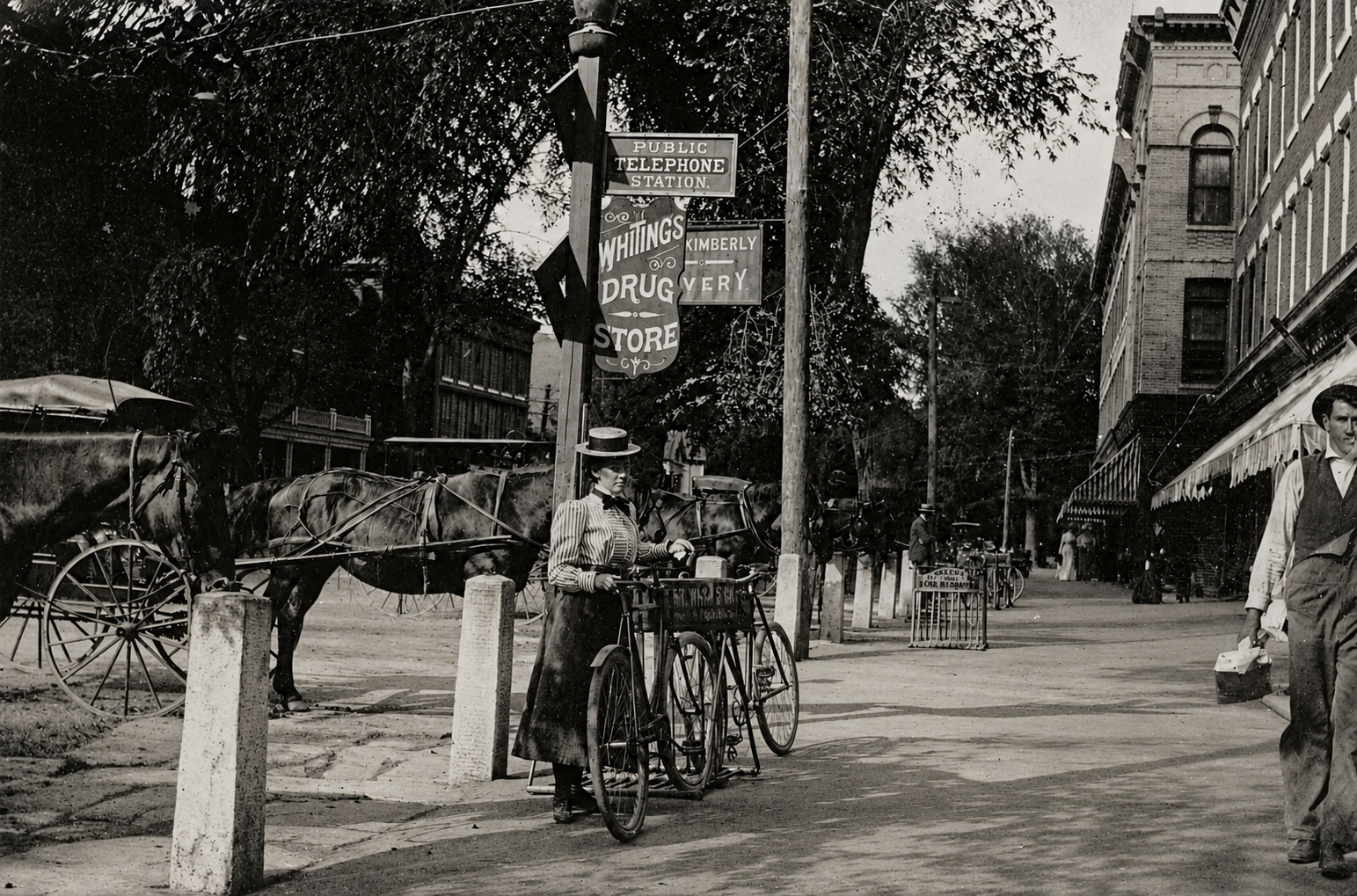
Places remember. Long before Calyx, 307 Main Street was a destination for botanical remedies, advice, and community.
Main Street, Great Barrington, circa 1900. Horse-drawn carriages and bicycles shared the streets outside F.T. Whiting & Son Apothecaries. The Whiting Drug Store sign can be seen hanging above the sidewalk.
Historic photograph by Julius Hall. Courtesy of Gary Leveille.
Main Street Life, Great Barrington, circa 1900
Long before Calyx opened its doors, Main Street was a place where people sought remedies, advice, and community. Among the storefronts was F.T. Whiting & Son, a neighborhood apothecary serving Great Barrington during an era when local drug stores were centers of commerce, conversation, and botanical medicine.
F.T. WHITING & SON, APOTHECARIES
For more than a century before Calyx opened its doors, 307 Main Street was associated with botanical remedies, medicines, and community care. Historical advertisements and photographs document F.T. Whiting & Son as one of Great Barrington's early apothecaries.
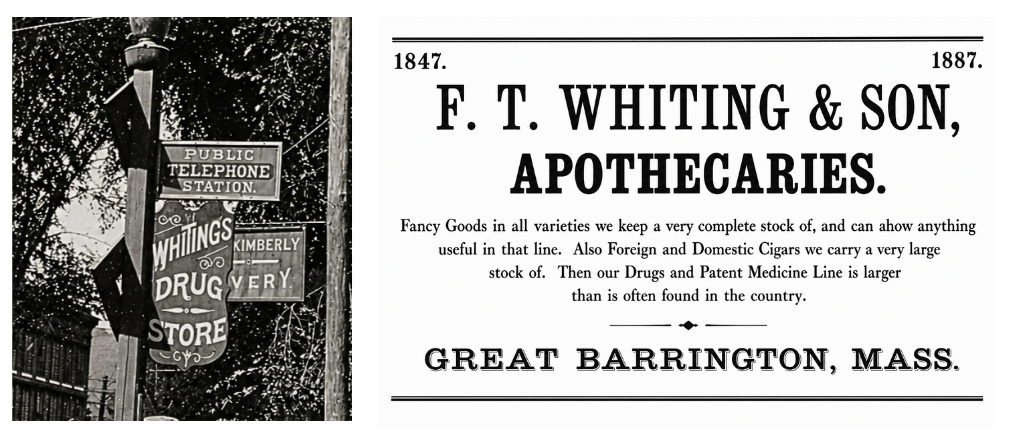
Left: Historic photograph showing the Whiting's Drug Store sign on Main Street, Great Barrington. Right: Advertisement for F.T. Whiting & Son
This surviving bottle is one of the few tangible artifacts linking today's Calyx to the apothecary tradition that once occupied 307 Main Street. Before modern packaging, medicines, tinctures, extracts, and botanical preparations were commonly dispensed in reusable glass containers such as these.
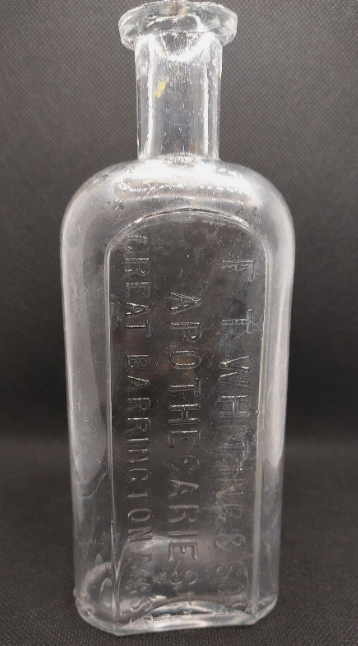
Embossed glass bottle from F.T. Whiting & Son Apothecaries, Great Barrington, Massachusetts.
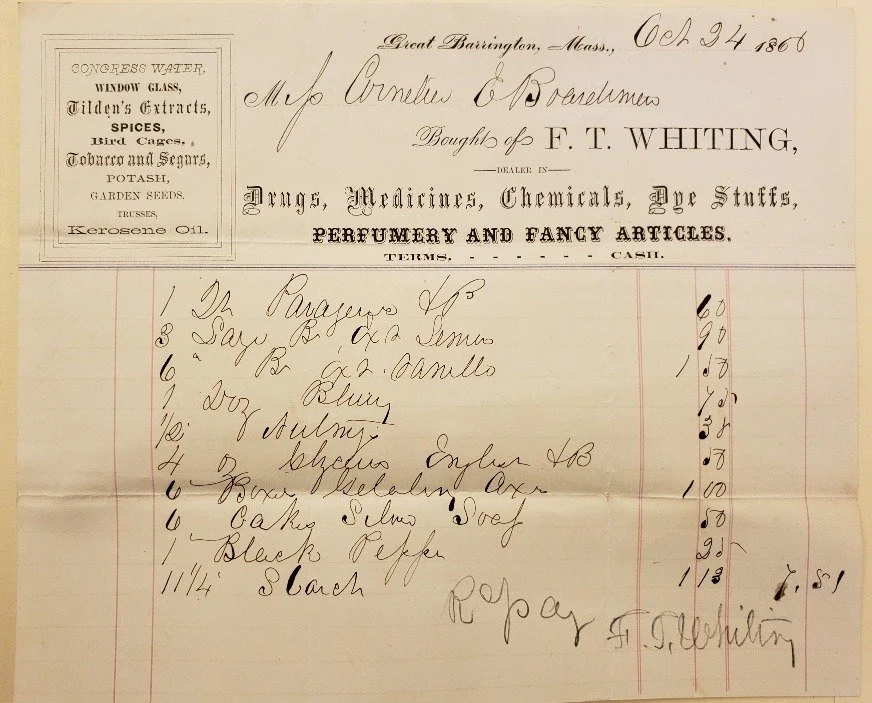
Cornelius Boardman's F.T. Whiting & Son receipt, October 24, 1860.
A DAY AT F.T. WHITING & SON
October 24, 1860
This 1860 receipt records a purchase at F.T. Whiting & Son, offering a glimpse into everyday life in Great Barrington more than 160 years ago.
Items Purchased
• Camphor (pain and respiratory remedies)
• Blue Vitriol (antiseptic and agricultural use)
• Sulphur (skin remedies)
• Black Pepper (digestive stimulant)
• Starch (medicinal and household use)
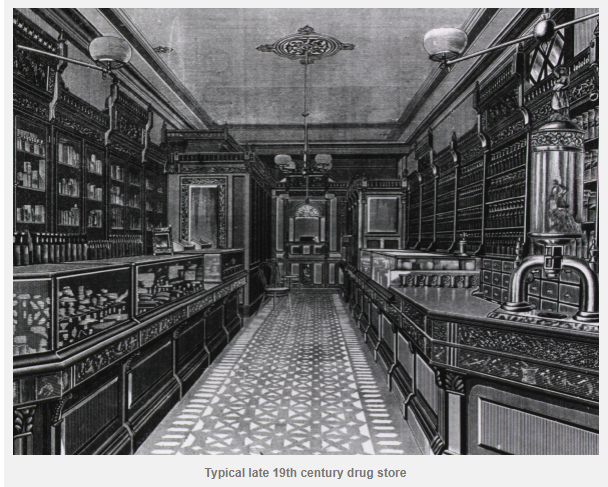
INSIDE A TURN-OF-THE-CENTURY APOTHECARY
What would a pharmacy like F.T. Whiting & Son have looked like?
Typical late nineteenth-century American apothecary. Pharmacies of this era were part medicine shop, part general store, and part community gathering place. Shelves were lined with tinctures, extracts, patent medicines, botanical remedies, and household goods.
While no known interior photograph of F.T. Whiting & Son survives, apothecaries across New England shared a similar character. Customers came not only to purchase medicines but also to seek advice, conversation, and trusted guidance. Behind glass cabinets and polished counters, pharmacists prepared remedies, filled prescriptions, and dispensed botanical medicines that reflected the medical practices of the day.
CANNABIS BEFORE PROHIBITION
Long before modern legalization, cannabis preparations were commonly sold in American pharmacies and apothecaries. During the late nineteenth and early twentieth centuries, tinctures, extracts, pills, and botanical preparations containing cannabis appeared in medical journals and pharmacy catalogs and were manufactured by major pharmaceutical companies of the era.
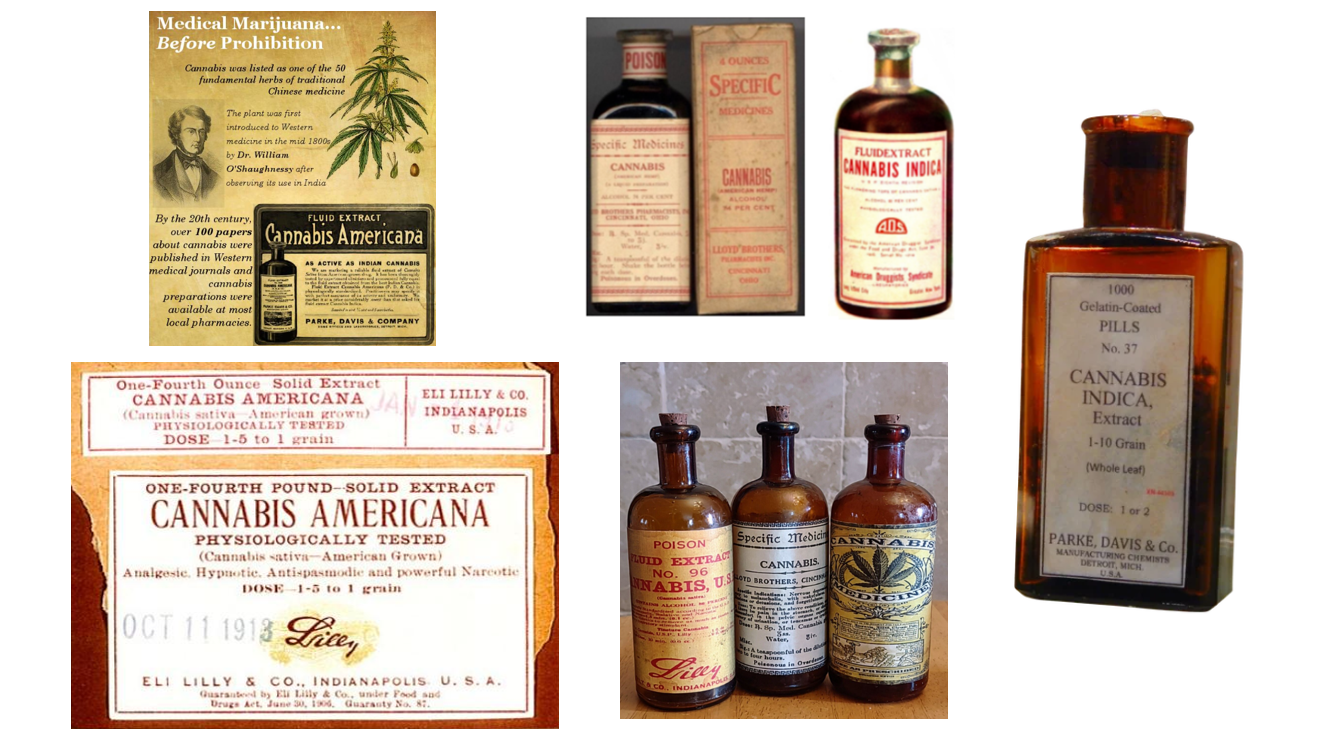
Examples of Cannabis Medicines Sold in American Pharmacies, c. 1880–1930
Examples of cannabis medicines and pharmaceutical preparations commonly available through American pharmacies and apothecaries before federal prohibition. Products included tinctures, extracts, pills, and botanical preparations manufactured by companies such as Parke-Davis, Eli Lilly, Lloyd Brothers, and others.
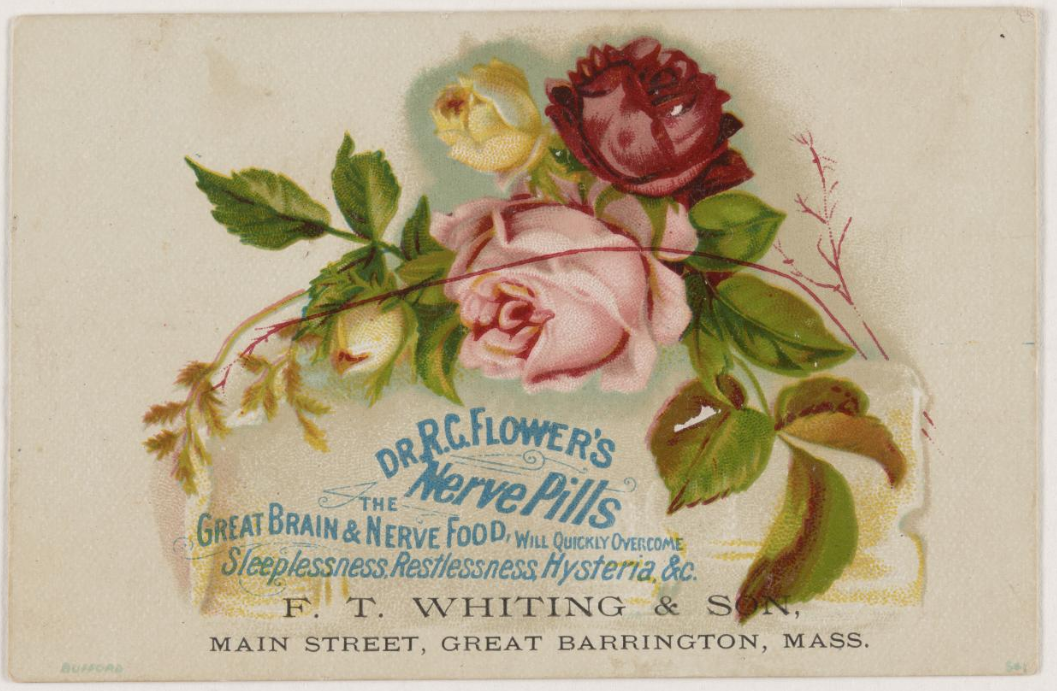
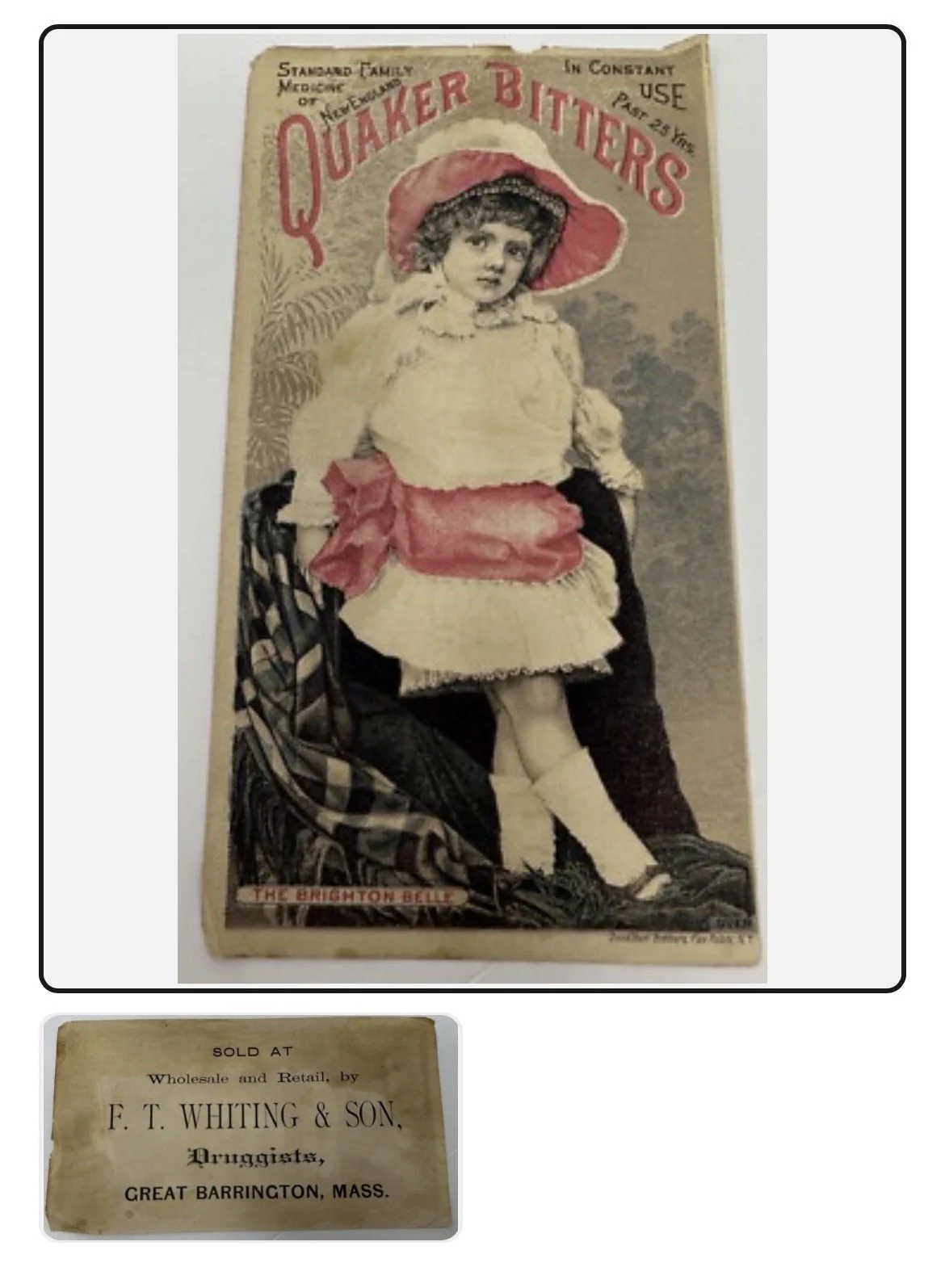
TRADE CARDS WERE THE SOCIAL MEDIA OF THE VICTORIAN ERA.
Long before websites, newsletters, and social media, businesses relied on beautifully illustrated trade cards to reach customers. Apothecaries such as F.T. Whiting & Son distributed these pocket-sized advertisements to promote medicines, remedies, and health products.
Many featured flowers, botanical imagery, and promises of wellness. While some products reflected genuine botanical traditions and others made claims that would not meet modern standards, these cards reveal how people of the era thought about health, healing, and the role of local pharmacies in community life.
More than a century later, they remain small works of art and remarkable pieces of Great Barrington history.
THE STORY CONTINUES…
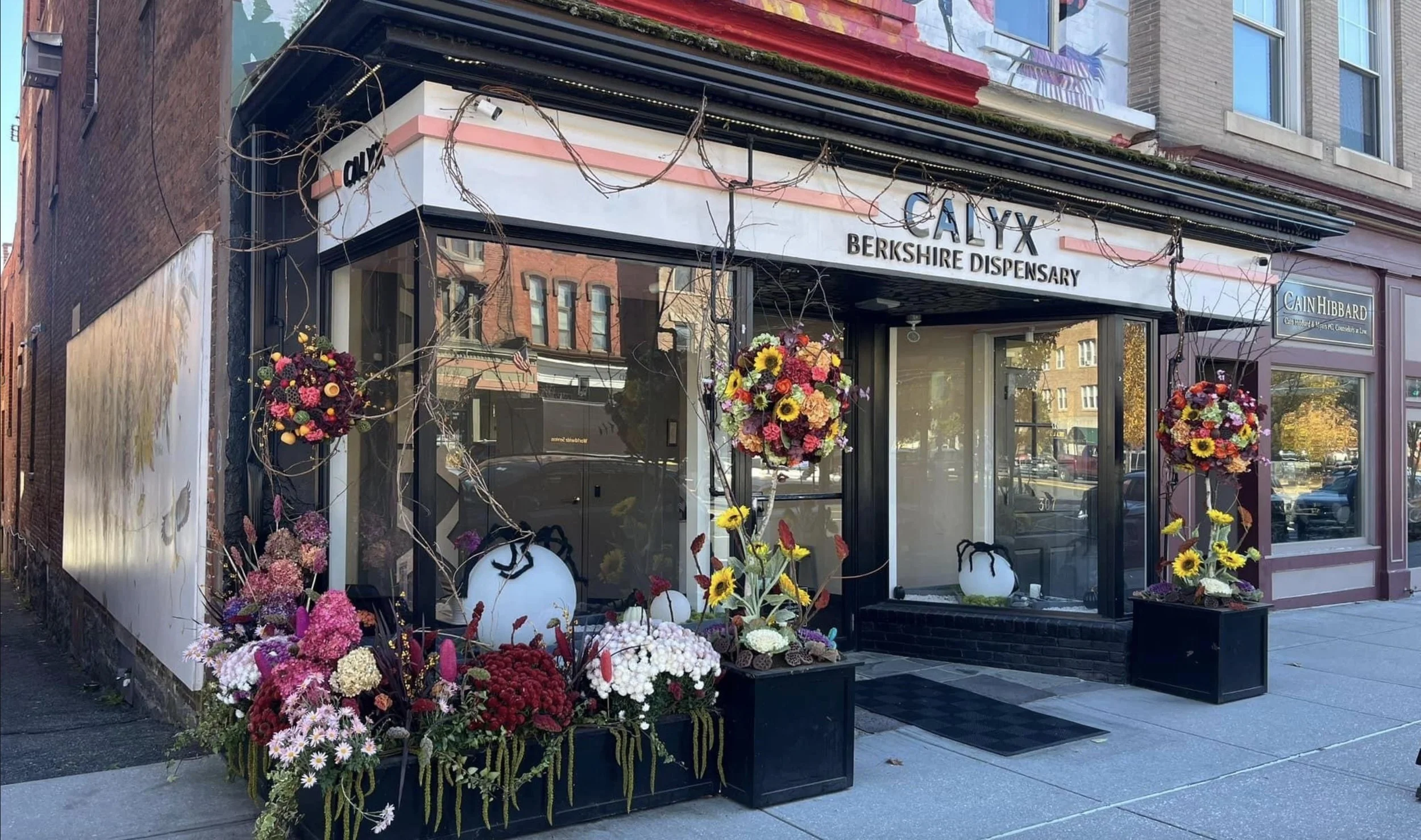
In 2020, more than a century after F.T. Whiting & Son served Great Barrington from 307 Main Street, Calyx opened its doors in the same building.
While the products, regulations, and language have changed, the spirit of botanical education and community remains.
Today, visitors still come to 307 Main Street seeking guidance about a plant.